
- Business Automation
- Business Operations
- CRM & Sales Operations
- Enterprise Software
- Enterprise Technology
- Insights
- MyTalent
- Partners
- Software
- Strategic-Partnership
- Web & Mobile Development
Your HR System Shouldn’t Create More Admin
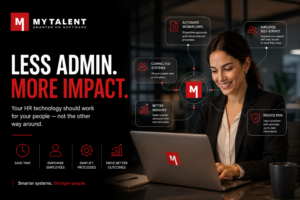
HR technology should make work easier.
However, many HR teams still copy information between systems, update spreadsheets and chase approvals. They also search through emails and answer the same employee questions every week.
Technology was meant to reduce this administration. Instead, it can sometimes create another layer of work.
And that’s a problem.
If your HR system creates more work than it removes, something isn’t working.
When Technology Becomes the Admin
Most businesses don’t deliberately create complicated HR processes. Instead, complexity builds over time.
For example, one system manages employee records while another handles payroll. Recruitment happens somewhere else. Meanwhile, leave requests arrive by email, documents live in shared folders and performance reviews sit in spreadsheets.
Each process might work on its own. Together, however, they create friction.
As a result, HR becomes the connection between different systems. Teams manually transfer information, check records and follow up on incomplete tasks.
The technology exists, but people are still doing the integration.
The Hidden Cost of Manual HR Admin
Manual administration rarely looks like a major business problem.
Five minutes updating a spreadsheet doesn’t seem like much. Neither does finding a document or sending another approval email.
However, these small tasks quickly add up.
Across hundreds of employees and multiple managers, HR teams can lose valuable time every week.
More importantly, administration takes HR away from higher-value work. Teams have less time to develop people, support managers and improve the employee experience.
Better systems can give that time back.
Stop Capturing the Same Information Twice
Imagine a new employee joining your business.
Their information is captured during recruitment. Then, it’s captured again during onboarding. HR may enter it into another system before payroll captures the same details.
Why should the same information be entered several times?
Connected HR software allows information to move with the employee.
For example, candidate information can flow into onboarding and employee records. From there, the same information can support payroll, performance and other HR processes.
Therefore, teams spend less time capturing data. There are also fewer opportunities for human error.
Give Employees More Control
HR teams often receive the same questions:
“Can you send me my payslip?”
“How much leave do I have?”
“Where can I find that policy?”
“Can I update my banking details?”
These requests are simple. Yet, across a large workforce, they create a significant amount of administration.
Employee self-service offers a better approach.
Employees can access information and complete everyday tasks themselves. As a result, they get faster answers while HR receives fewer routine requests.
It’s better for employees and better for HR.
Give Managers Better Tools
Managers also need easy access to the right information.
For example, approvals, performance processes and team documentation shouldn’t always require HR intervention.
Instead, managers should be able to complete routine tasks through simple workflows.
This gives managers more responsibility for their teams. At the same time, HR can maintain control over the overall process.
Automation Should Actually Remove Work
Digitising a bad process doesn’t automatically make it better.
For example, replacing a paper form with an online form achieves very little if someone still needs to download it. If they then email it, capture the information again and notify another person, the process is still manual.
Good automation removes those unnecessary steps.
A request is submitted. The correct person receives it. Once approved, the information is updated and the process moves forward.
HR doesn’t need to chase every step.
That’s when technology starts doing the work it was designed to do.
Create One Source of Truth
Disconnected information creates uncertainty.
Which spreadsheet is current? Has payroll received the change? Did the manager approve the request? Where is the signed document?
A connected HR system provides one source of truth.
HR gets better visibility, while managers get access to the information they need. Employees can also manage more everyday tasks themselves.
As a result, everyone spends less time searching for information.
Give HR More Time for People
HR technology shouldn’t simply replace paper. It should give people time back.
HR teams should have more time to support employees and develop talent. Managers should have more time to lead their teams. Employees should also be able to access what they need without unnecessary friction.
Ultimately, better HR technology creates capacity.
It allows organisations to spend less time managing processes and more time focusing on people.
Less Admin. More Impact.
At MyTalent Software, we believe technology should simplify the way organisations manage their people.
MyTalent connects HR, payroll, recruitment, performance, compliance, employee engagement and business processes.
As a result, organisations can reduce manual administration and create a more connected employee experience.
Because good HR technology isn’t measured by how many features it has.
It’s measured by how much unnecessary work it removes.
Related Post
Integrating a Recruitment Platform
Organizations are competing for top talent in an increasingly competitive market, where…

Why Employee Experience Is the Future of Education
Educational institutions have always focused on creating positive learning experiences for students. …
Building a More Connected Healthcare Organization
Healthcare organizations face increasing pressure every day. Between managing patients, coordinating…
Different Industries. Better Connected.
From recruitment and business operations to property, better outcomes start with people,…
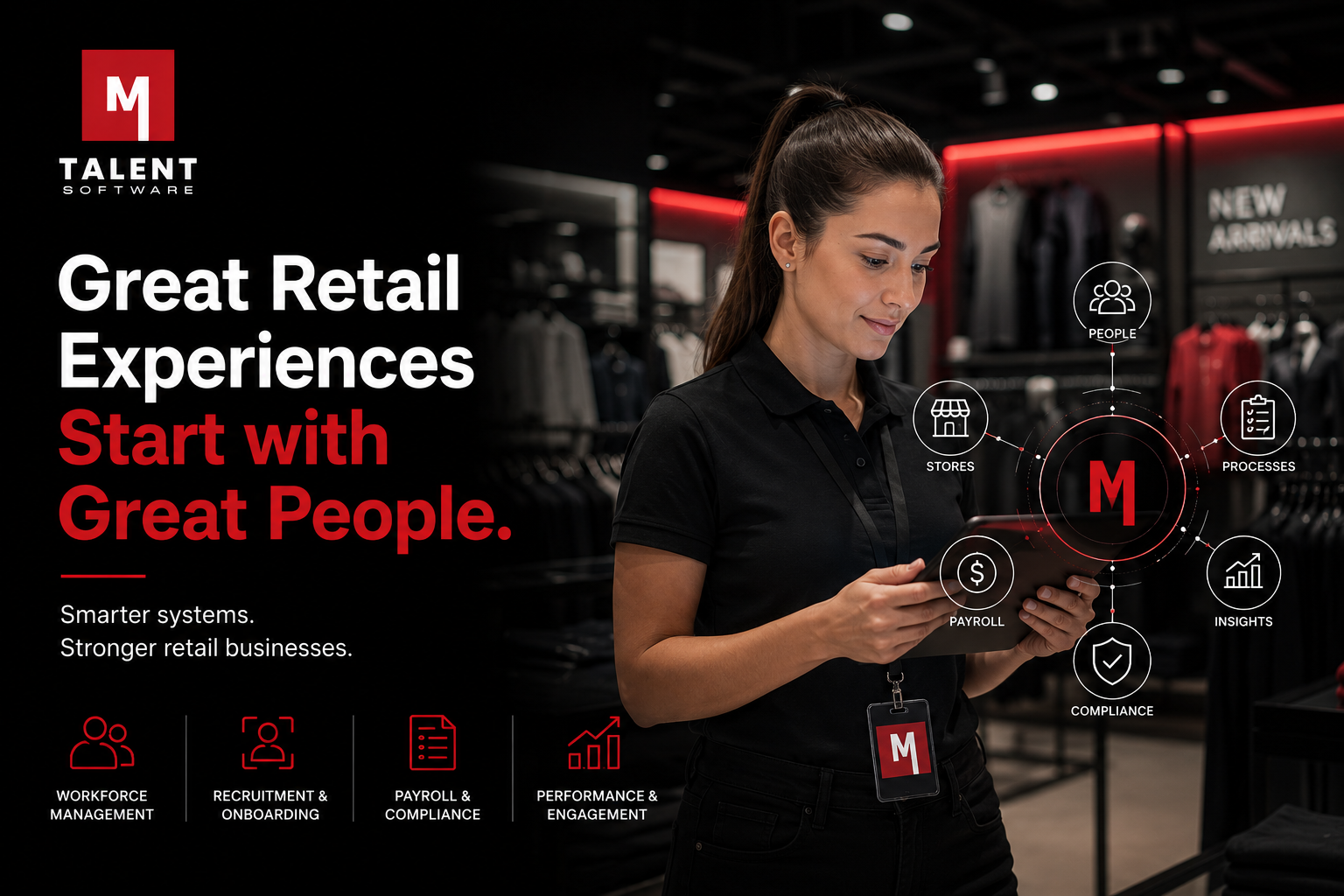
Retail Moves Fast. Your People Systems Should Too.
Retail moves quickly. Customer expectations change, seasonal demand fluctuates, stores get busier,…