
Why Custom Software Is Replacing Off-The-Shelf Business Tools
Most businesses start with off-the-shelf software.
It makes sense initially.
Generic platforms are:
- fast to deploy
- relatively affordable
- easy to access
- designed for broad use cases
For smaller businesses with simple operational requirements, these tools can work effectively for a period of time.
But as organizations grow, many begin experiencing the same problem.
Their operations no longer fit the software they rely on.
Instead of software improving operational efficiency, teams start adapting their workflows around the limitations of the platform itself.
This is one of the biggest reasons businesses are increasingly investing in custom software solutions designed specifically around their operational requirements.
Generic Software Is Designed for Mass Use
Off-the-shelf software platforms are built to support large numbers of businesses across different industries.
To achieve this, they must remain relatively generalized.
This creates limitations.
Every business has:
- unique workflows
- operational structures
- reporting requirements
- approval processes
- customer management models
- scalability goals
Generic software often forces businesses into standardized operational structures that may not align with how the organization actually operates.
Over time, this creates operational friction across teams and departments.
Businesses Start Creating Workarounds
One of the clearest signs a business has outgrown generic software is the rise of operational workarounds.
Teams begin relying on:
- spreadsheets
- disconnected tools
- manual updates
- duplicated processes
- third-party plugins
- fragmented workflows
To compensate for software limitations.
Initially, these workarounds may appear manageable.
But as operational complexity increases, they often create:
- inconsistent reporting
- visibility gaps
- operational bottlenecks
- communication delays
- duplicated administration
Businesses eventually spend more time managing systems than improving operations.
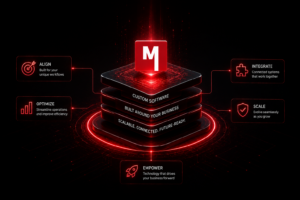
Custom Software Aligns Technology With Operations
Custom software development changes the relationship between technology and operations.
Instead of adapting workflows around software limitations, businesses build systems around how they actually operate.
This creates stronger alignment across:
- workflows
- reporting
- communication
- approvals
- operational visibility
- customer management
Technology becomes operational infrastructure rather than operational compromise.
Custom systems are designed to support the organization’s processes directly instead of forcing teams into rigid predefined structures.
Scalability Requires Flexible Infrastructure
Operational complexity increases significantly as businesses grow.
Generic software may work effectively at smaller scale but often becomes restrictive as organizations expand.
Businesses frequently encounter limitations involving:
- integrations
- automation flexibility
- workflow customization
- reporting visibility
- operational scalability
Custom platforms provide far greater flexibility because businesses can evolve systems alongside operational growth.
This creates infrastructure capable of supporting:
- expansion
- automation
- operational complexity
- evolving business models
Without depending heavily on fragmented workarounds.
Connected Systems Improve Operational Efficiency
Many businesses operate through disconnected software ecosystems where platforms do not communicate effectively.
This creates repetitive manual work across departments.
Employees often spend hours:
- transferring information
- consolidating reports
- updating multiple systems
- verifying operational data
Custom software allows businesses to centralize operations into connected environments where workflows and data move seamlessly across systems.
This improves:
- visibility
- collaboration
- operational speed
- reporting accuracy
- process consistency
Operational efficiency improves naturally when systems are designed around connectivity from the beginning.
Customer Experience Also Improves
Operational systems directly affect customer experience.
When businesses rely heavily on fragmented or inflexible platforms, customers often experience:
- delayed responses
- inconsistent communication
- fragmented onboarding
- operational inefficiencies
Custom software helps businesses create smoother customer journeys by aligning operational workflows more effectively behind the scenes.
This creates stronger:
- responsiveness
- service consistency
- operational coordination
- customer visibility
Technology becomes part of the customer experience itself.
Modern Businesses Need Competitive Operational Infrastructure
Technology is no longer simply a support tool.
It has become operational infrastructure.
Businesses competing in fast-moving markets increasingly require systems capable of supporting:
- speed
- visibility
- automation
- scalability
- operational adaptability
Generic software can only support operational flexibility to a certain point.
Organizations focused on long-term scalability increasingly invest in systems designed around their specific operational goals and future growth strategy.
Custom Software Does Not Mean Overcomplication
Many businesses assume custom software automatically means large, overly complex systems.
But modern custom software development is increasingly focused on:
- simplicity
- scalability
- modular architecture
- connected workflows
- user experience
The goal is not building unnecessary complexity.
The goal is removing operational friction.
The most effective systems are often the ones that feel intuitive and invisible during daily operations.
The Future of Enterprise Operations Is Personalized Infrastructure
Businesses are becoming increasingly operationally unique.
As industries evolve, organizations require systems that support:
- specialized workflows
- unique operational models
- customized reporting
- flexible automation
- connected ecosystems
This is driving the shift away from rigid one-size-fits-all software toward personalized operational infrastructure.
Custom software is becoming less of a luxury and more of a strategic operational investment.
Final Thoughts
Off-the-shelf software remains valuable for many operational needs.
But as businesses scale, operational complexity often exposes the limitations of generalized platforms.
Organizations investing in custom software gain stronger:
- operational alignment
- workflow flexibility
- scalability
- visibility
- automation capability
The future of business technology is increasingly moving toward systems designed around how businesses actually operate rather than forcing operations into generic software environments.
Technology works best when it adapts to the business — not the other way around.
Build Software Around Your Business
MyTalent Software develops scalable custom software solutions designed around operational efficiency, workflow automation, and connected enterprise infrastructure built for long-term growth.
Related Post
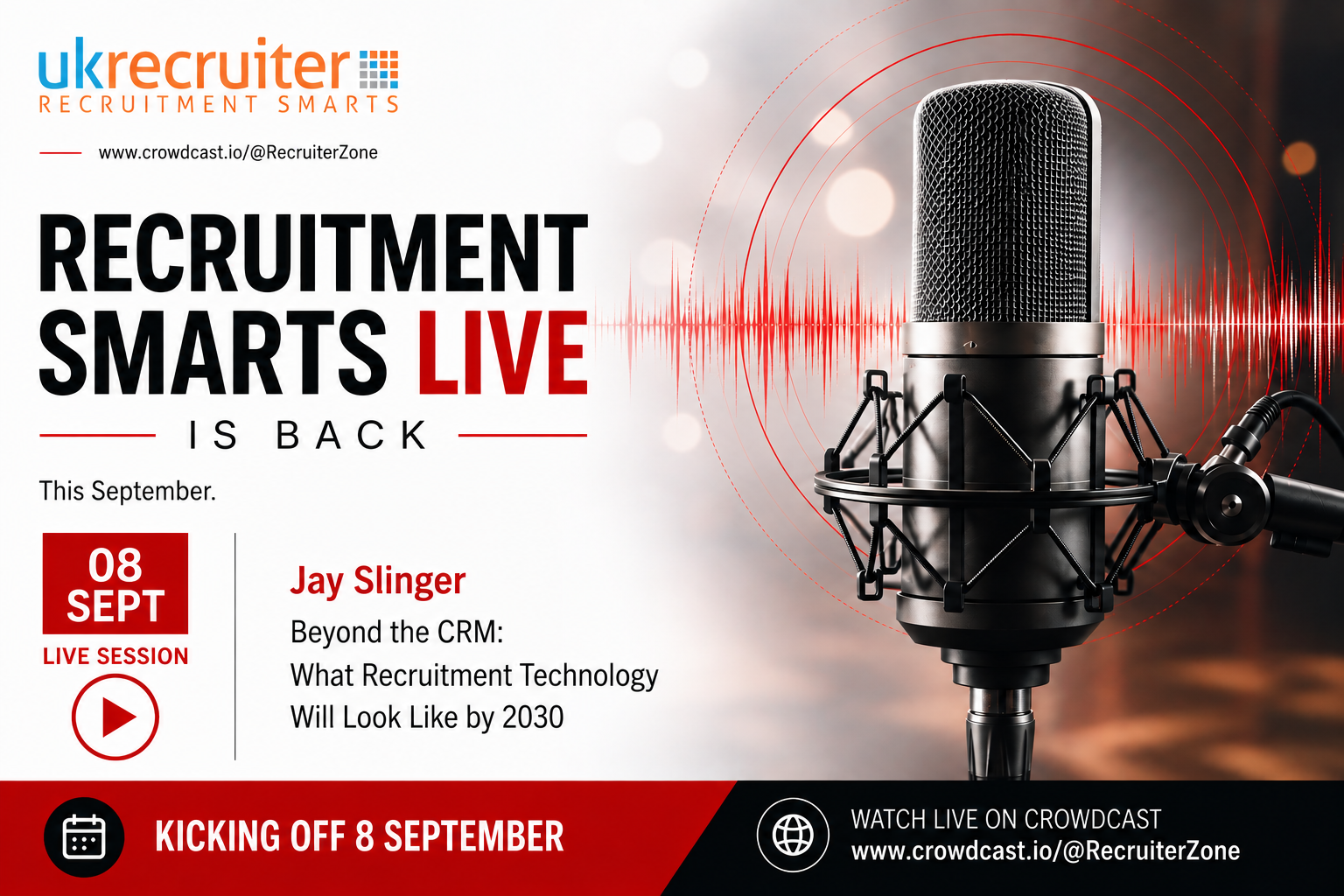
Don’t Miss Recruitment Smarts Live This September
Something exciting is coming to Recruitment Smarts Live. On 8 September, Jay…