
Why Scalable Businesses Prioritize Workflow Architecture
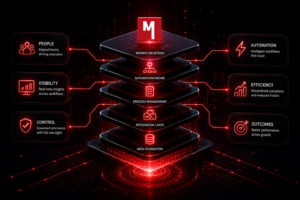
Many businesses focus heavily on growth while paying very little attention to the structure behind their operations.
At smaller scale, workflows often evolve naturally through:
- emails
- spreadsheets
- manual approvals
- informal processes
- disconnected tools
Initially, these workflows may appear manageable.
But as businesses grow, operational complexity increases rapidly.
Teams expand.
Departments multiply.
Customer volumes increase.
Operational dependencies become more interconnected.
Without structured workflow architecture, businesses eventually experience operational friction that slows growth across the organization.
This is why scalable companies increasingly prioritize workflow architecture as part of their long-term operational strategy.
Workflow Problems Usually Start Small
Operational inefficiencies rarely appear all at once.
Most workflow problems begin as small inconveniences:
- delayed approvals
- duplicated updates
- missing information
- inconsistent processes
- communication gaps
At first, teams work around these issues manually.
But over time, these inefficiencies compound across departments and workflows.
Eventually businesses begin noticing:
- slower execution
- reduced visibility
- operational bottlenecks
- inconsistent customer experiences
- increased administrative workload
Growth starts placing pressure on workflows that were never designed to scale properly.
Workflow Architecture Creates Operational Structure
Workflow architecture refers to how operational processes are designed, connected, and managed across the business.
Modern businesses rely on workflows for:
- approvals
- onboarding
- reporting
- communication
- customer management
- operational tracking
- collaboration
When workflows are fragmented or inconsistent, operational performance declines significantly.
Structured workflow architecture helps businesses:
- standardize operations
- reduce friction
- improve visibility
- support automation
- improve scalability
Instead of workflows evolving reactively, businesses create operational systems intentionally.
Scalability Depends on Workflow Consistency
One of the biggest operational challenges growing businesses face is inconsistency.
Different teams often develop different ways of handling:
- approvals
- communication
- customer interactions
- reporting
- operational processes
This creates fragmented operational environments that become increasingly difficult to manage at scale.
Workflow architecture creates consistency across departments by standardizing operational processes.
This improves:
- collaboration
- visibility
- accountability
- operational speed
Scalable businesses understand that operational consistency is critical for sustainable growth.
Automation Requires Strong Workflow Design
Many businesses attempt to implement automation before properly designing operational workflows.
This often creates:
- broken processes
- workflow conflicts
- inconsistent outputs
- operational confusion
Automation only works effectively when workflows are clearly structured.
Strong workflow architecture allows businesses to automate:
- approvals
- notifications
- onboarding
- operational updates
- reporting
- communication workflows
Without creating instability across the organization.
The goal is not simply automating tasks.
The goal is building operational environments that function efficiently and predictably at scale.
Workflow Visibility Improves Decision-Making
Businesses cannot optimize workflows they cannot clearly see.
Many organizations struggle with visibility because operational processes exist across disconnected systems and manual communication channels.
Workflow architecture improves visibility by centralizing operational activity across:
- departments
- approvals
- operational stages
- communication flows
- reporting systems
Leadership teams gain stronger oversight into:
- bottlenecks
- delays
- workflow performance
- operational dependencies
This allows businesses to identify inefficiencies much faster and improve operational execution continuously.
Employees Work Better in Structured Operational Environments
Poorly designed workflows create frustration for employees.
Teams often spend unnecessary time:
- searching for information
- requesting updates
- following up manually
- correcting operational errors
- navigating disconnected systems
This reduces productivity while increasing operational fatigue.
Structured workflow environments simplify operational execution.
Employees gain:
- clearer processes
- better visibility
- centralized communication
- improved collaboration
- reduced repetitive administration
Technology becomes operational support infrastructure instead of operational friction.
Customer Experience Depends on Operational Flow
Many customer experience problems are actually workflow problems.
When workflows break internally, customers often experience:
- delayed communication
- inconsistent onboarding
- slow response times
- fragmented interactions
- operational confusion
Well-designed workflow architecture improves customer operations by ensuring processes remain:
- connected
- visible
- standardized
- scalable
This creates smoother customer experiences across the organization.
Businesses Are Moving Toward Connected Workflow Ecosystems
Modern businesses increasingly prioritize connected operational ecosystems rather than isolated processes.
This means workflows are designed to:
- integrate across systems
- support automation
- centralize visibility
- reduce operational silos
- improve collaboration
The future of business operations is becoming increasingly workflow-driven.
Organizations that design scalable workflow infrastructure early are often far better positioned for long-term operational growth.
Final Thoughts
Workflow architecture has become essential operational infrastructure for modern businesses.
As organizations scale, fragmented workflows create inefficiencies that reduce visibility, slow execution, and limit scalability.
Businesses prioritizing workflow architecture gain stronger:
- operational consistency
- automation capability
- visibility
- collaboration
- scalability
Growth is no longer simply about increasing activity.
It is about building operational systems capable of supporting complexity efficiently.
The businesses scaling most effectively are increasingly those designing workflows intentionally rather than allowing operations to evolve reactively.
Build Smarter Workflow Infrastructure
MyTalent Software helps businesses streamline operations through connected workflow systems, automation architecture, and scalable enterprise software designed for long-term operational growth.
Related Post

The Future of Legal Operations: Creating Smarter, More Connected Workplaces
The legal profession is built on precision, accountability, and trust. But behind…

Exceptional Guest Experiences Start with Exceptional Teams
In hospitality, every interaction matters. From the first welcome at reception to…
Building a More Connected Manufacturing Business
Manufacturing has always been about efficiency. Whether it's managing production schedules, controlling…

The Future of Construction is Connected
For many organizations, outdated systems and manual processes make managing that complexity…

Logistics Workforce Management Software
The logistics industry never stops moving. Behind every successful delivery, warehouse, distribution…